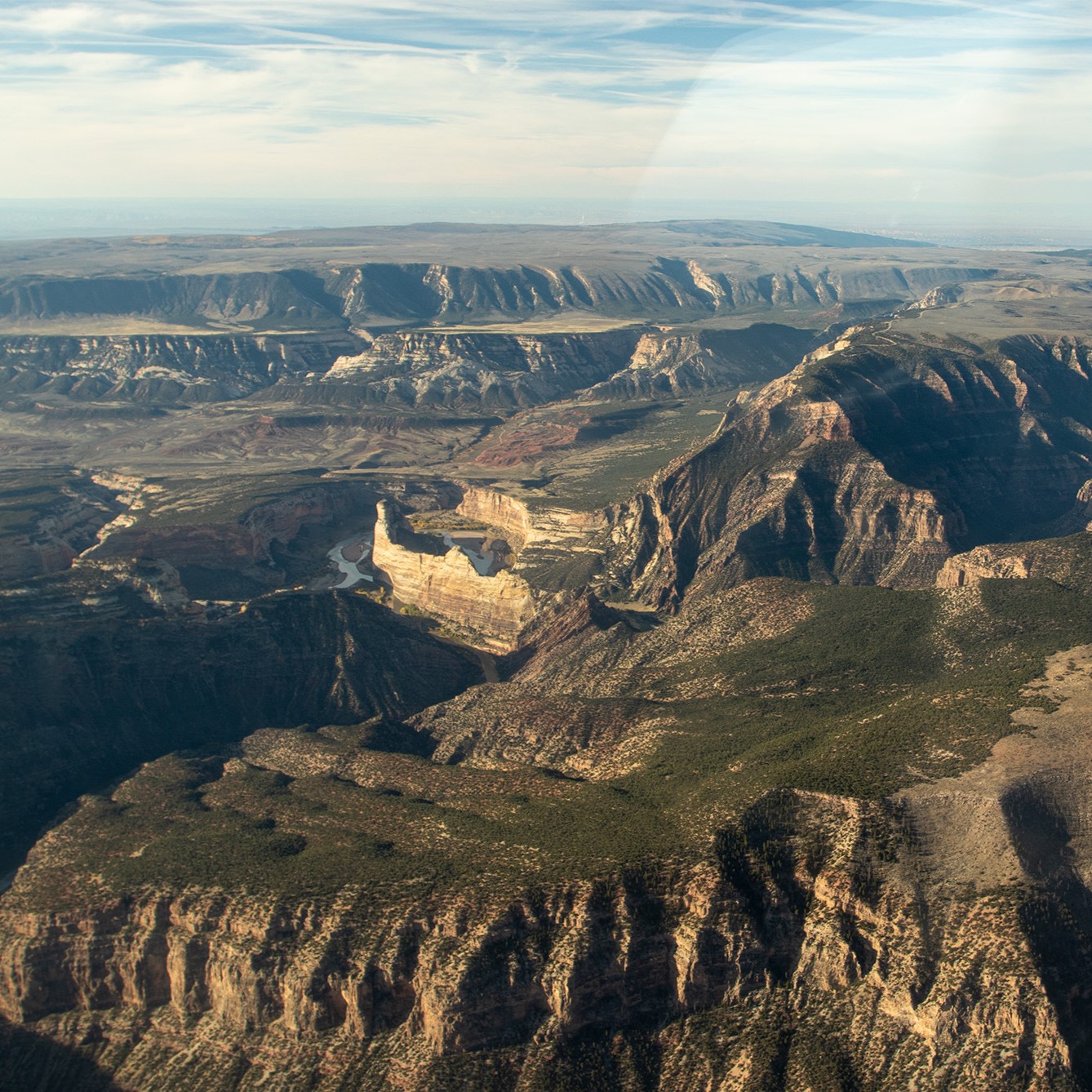


In the remote northwestern corner of Colorado, the Greater Dinosaur landscape spans a stunning expanse of high desert plateaus, wild rivers and red rock canyons. Anchored by Dinosaur National Monument and abundant with incredible wilderness quality lands along the Yampa, Green and Little Snake rivers, Greater Dinosaur is one of the largest unprotected wildland complexes in Colorado.
Hidden Secion
Your content goes here. Edit or remove this text inline or in the module Content settings. You can also style every aspect of this content in the module Design settings and even apply custom CSS to this text in the module Advanced settings.
Wilderness
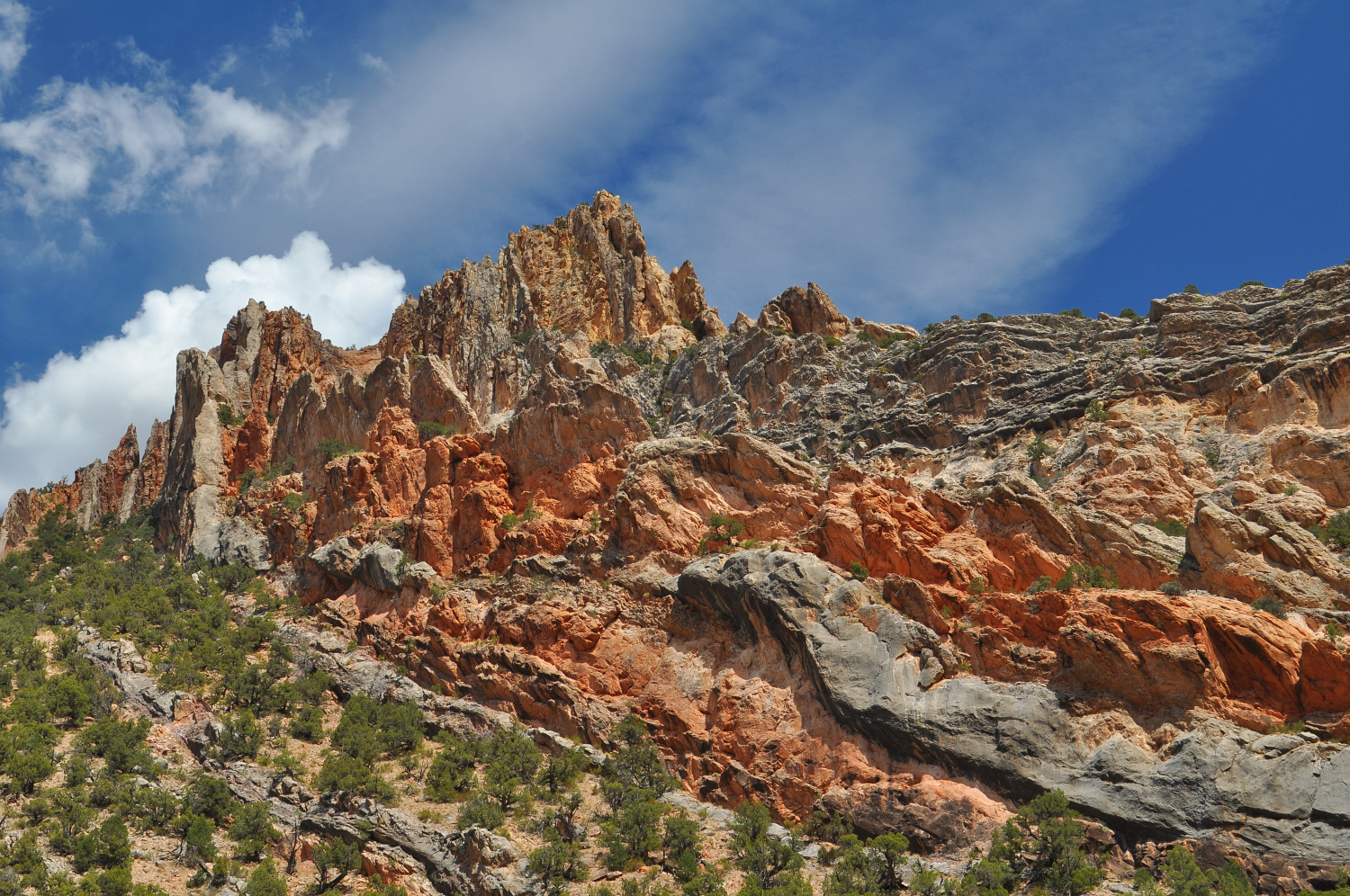
With ten Wilderness Study Areas and vast expanses of undeveloped Bureau of Land Management (BLM) public lands, the Greater Dinosaur landscape stands out as one of the most extensive concentrations of wilderness-quality lands in Colorado – by some accounts, the largest unprotected wildland complex in the state. This rugged and remote region includes dramatic features like Cross Mountain, where the Yampa River slices through a limestone gorge more than 1,000 feet deep, and Cold Springs Mountain, a broad uplift marked by shallow vernal pools and steep canyons. Vermillion Basin is known for its vast expanse of red clay canyons and crimson bluffs. From the sculpted sandstone of Skull Creek and Bull Gulch Wilderness Study Areas, to the isolated Ant Hills and Vale of Tears Wilderness Study Areas adjacent to Dinosaur National Monument, this landscape offers an incredible diversity of unroaded terrain, providing rare opportunities for solitude, backcountry recreation and intact natural ecosystems.
Wildlife
The Greater Dinosaur landscape is renowned for its exceptional wildlife and hunting values, offering some of the most sought-after big game opportunities in Colorado. Game Management Units 2, 10, and 201 – covering areas like Cold Springs Mountain and Moosehead Mountain – are legendary among hunters for producing trophy-class elk and mature mule deer. Pronghorn antelope also thrive across the region’s expansive open basins. Vast roadless areas and limited access keep hunting pressure low, which enhances the quality of the experience and helps sustain healthy, resilient wildlife populations. The region is also one of Colorado’s last strongholds for the greater sage-grouse, a species known for its elaborate spring mating dance. The combination of exceptional big game habitat and remote, rugged terrain makes the Greater Dinosaur landscape a vital area for both wildlife and the outdoor recreation opportunities that such a healthy habitat provides.
Water
The Greater Dinosaur landscape is shaped by its exceptional river systems, which are vital to the region’s ecology, recreation and way of life. The Yampa River – one of the last major free-flowing tributaries of the Colorado River basin – serves as the lifeblood of Northwest Colorado’s ranches, sustaining agriculture, wildlife and rural communities. The Green River, one of the West’s most iconic waterways, flows through the serene wetlands of Browns Park National Wildlife Refuge and into the dramatic canyons of the Gates of Lodore within Dinosaur National Monument, offering world-class opportunities for fishing and boating. Meanwhile, the Little Snake River drains a vast arid basin and delivers significant sediment loads to the Yampa and eventually the Green River, helping to build and maintain sandbars and riparian habitats as far downstream as Canyonlands National Park in Utah.
If You Visit
Pitch a tent under the stars in Browns Park, where the only sounds are the rustle of cottonwoods, the splashes of the Green River and the distant call of sandhill cranes. Or, hike to the rim of Cross Mountain and gaze down into the Yampa River’s sheer limestone gorge, carved over millennia through one of Colorado’s most rugged landscapes. Whether you’re camping, hiking, fishing, rafting or simply taking in the solitude, the Greater Dinosaur landscape offers a rare chance to experience the untamed beauty and quiet power of the American West.
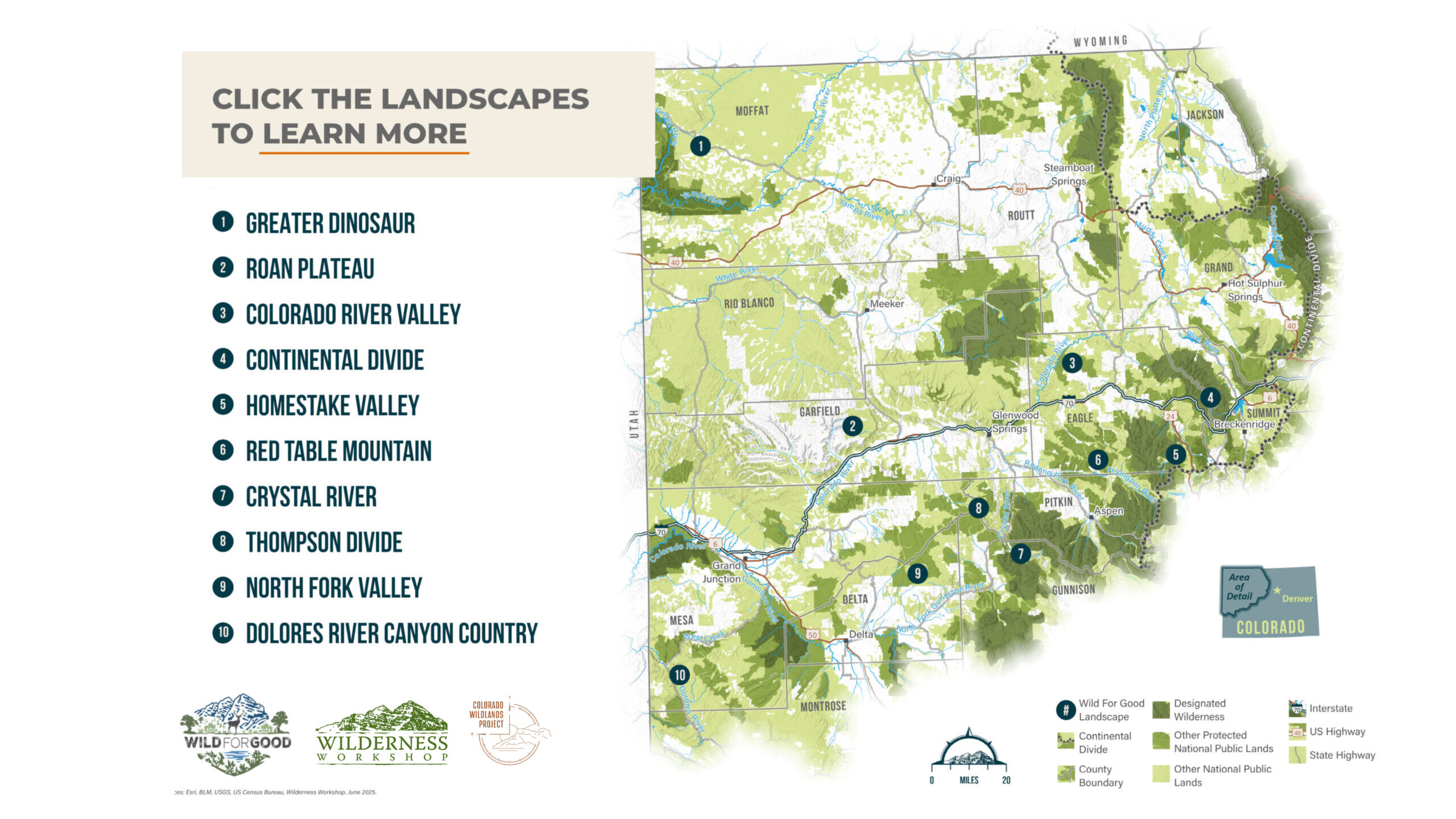
Explore the Wild For Good Landscapes

Protect what you love. Act today.
Proactive work to protect our local public lands is more important than ever. Please join us in this important work. Together, our community can keep our treasured public lands and waters…Wild for Good.